
How to Choose an Automatic Water Level Controller for Your Home
Managing your home's water supply can be challenging, especially when you have to monitor overhead tanks, switch water pumps on and off manually, or deal with overflowing water tanks. An automatic water level controller for home provides a convenient solution by automatically managing water levels and controlling pump operation according to your requirements.
Whether you live in an independent house, apartment, or multi-storey building, choosing the right water level controller can help prevent water wastage, reduce unnecessary pump operation, and make everyday water management easier.
In this guide, we will explain the important factors to consider when selecting an automatic water level controller for your home.
What Is an Automatic Water Level Controller?
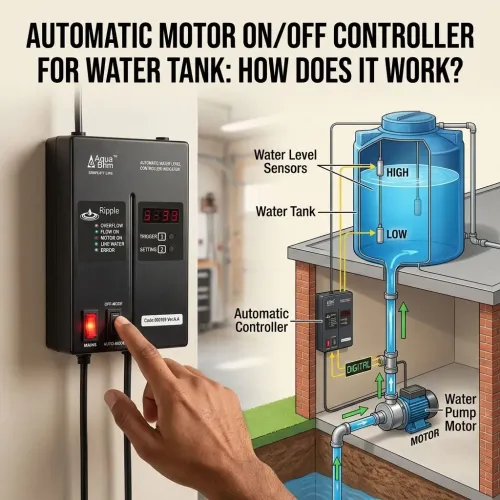
An automatic water level controller is a device that monitors the water level in a tank and controls the connected water pump based on predefined water-level conditions.
Depending on the system, it can automatically switch the pump on when water is needed and switch it off when the tank reaches the desired level. Advanced systems can also provide low-water alerts, overflow prevention, and additional pump-protection features.
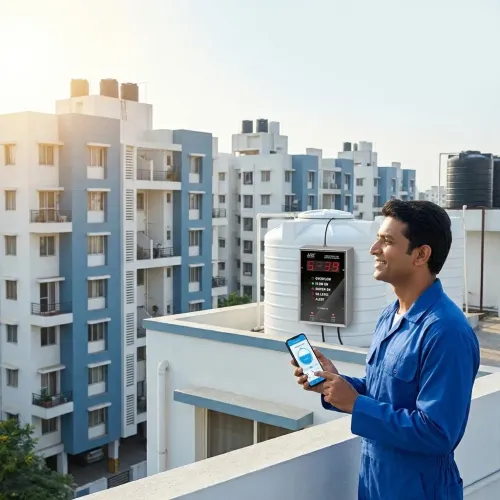
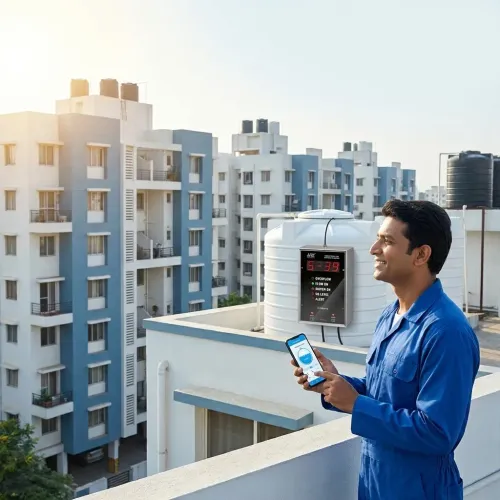
A wireless water level controller can offer greater installation flexibility by communicating with tank sensors without requiring a long signal cable between the tank and the controller.
1. Understand Your Home's Water Storage Requirements
Before purchasing a water level controller, identify your home's water storage arrangement.
Consider the following questions:
Do you have an overhead water tank, an underground sump, or both?
Do you need to manage one tank or multiple tanks?
Is water supplied through a municipal connection, a borewell, or another source?
Do you want to automate only the overhead tank or coordinate water transfer between the sump and overhead tank?
The answers will help you select a controller that matches your home's water supply requirements.
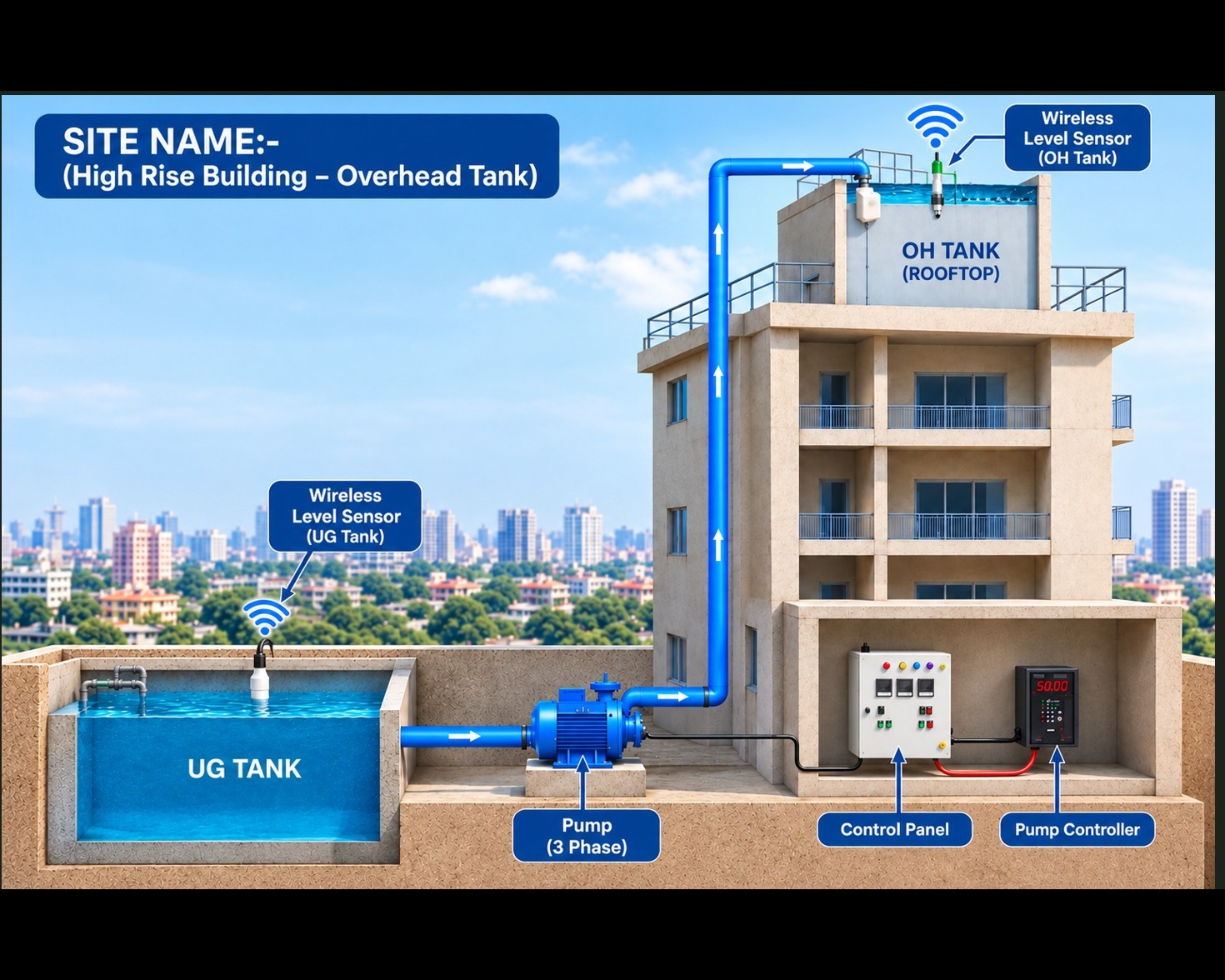
For example, a house with an underground sump and an overhead tank may benefit from a system that monitors both water levels and controls the transfer pump accordingly.
2. Look for Automatic Pump ON/OFF Control
One of the most important features of an automatic water level controller for home is automatic pump operation.
A suitable system should monitor the tank's water level and switch the pump on or off according to its configured operating conditions.
This reduces the need to climb onto the roof or repeatedly check the tank manually.
Automatic operation can also help prevent unnecessary pump running and reduce water wastage caused by overflowing tanks.
When comparing products, check whether the controller supports your specific tank arrangement and pump requirements.
3. Choose a Controller with Overflow Protection
Water overflowing from an overhead tank is a common household problem. It can waste valuable water and increase electricity consumption when the pump continues running unnecessarily.
A water level controller with overflow prevention helps stop the pump when the tank reaches its configured upper water level.
For homes with irregular water pressure, multiple tanks, or frequent changes in water usage, reliable water-level detection is particularly important.
Before purchasing, check how the controller detects the full-tank condition and whether it provides a clear indication of the current operating status.
4. Check for Dry-Run Protection
Dry running occurs when a pump operates without an adequate water supply. Depending on the pump and operating conditions, this can cause overheating, damage, and unnecessary maintenance expenses.
If your home uses an underground sump, borewell, or another water source with fluctuating availability, consider a controller with a suitable dry-run protection mechanism.
Such a system can help prevent pump operation when the required water supply is unavailable, provided the controller supports the necessary sensors or protection method.
Always verify the dry-run protection functionality of the particular model you intend to purchase.
5. Decide Between Wired and Wireless Technology
Water level controllers generally use wired sensors or wireless communication, depending on the product design.
Wired Water Level Controllers
Wired systems use physical cables to connect the sensors to the controller. They may be suitable for installations where cable routing is straightforward and the wiring can be installed and maintained conveniently.
Wireless Water Level Controllers
Wireless systems communicate between the tank sensors and the controller using radio-frequency technology or another supported wireless method.
They can be useful when the overhead tank is far from the pump or controller, or when installing long sensor cables would be inconvenient.
When choosing a wireless water level controller, consider the communication range, building structure, interference, sensor reliability, and installation environment.
Aquabrim offers wireless water-level automation solutions designed to simplify water management in residential and other applications.
6. Check Pump Compatibility and Electrical Ratings
Not every water level controller is suitable for every pump.
Before buying, verify the following specifications:
Pump power rating in HP or kW.
Operating voltage and electrical requirements.
Supported pump-control method.
Compatibility with single-phase or three-phase installations, as applicable.
Whether an external contactor or other switching equipment is required.
Using a controller with an unsuitable electrical rating can compromise the reliability and safety of the installation.
For higher-powered pumps, ensure that the switching arrangement is appropriately rated and installed by a qualified electrician.
7. Consider Multiple-Tank Monitoring
Some homes have more complex water storage arrangements involving an underground sump, an overhead tank, and additional storage tanks.
In these situations, a controller that supports multiple tanks can simplify water management.
Depending on the system, multiple-tank monitoring may help coordinate water transfer, prevent overflow, and provide better visibility into water availability.
If your property has more than one tank, confirm the number of tanks and sensors supported by the controller before making a purchase.
8. Evaluate Smart Monitoring and Alerts
Modern water level controllers may offer additional monitoring features beyond automatic pump switching.
Depending on the model, these features can include:
Water-level status indicators.
Tank-full and tank-low indications.
Pump operating-status monitoring.
Wireless communication between sensors and the controller.
Mobile or web-based monitoring.
Remote notifications and connected-device functionality.
Smart monitoring can be especially useful when the overhead tank is difficult to access or when you want greater visibility into your home's water supply.
However, not every controller includes every feature. Check whether the specific model supports mobile connectivity, internet access, or remote alerts before purchasing.
9. Compare Build Quality, Warranty, and After-Sales Service
An automatic water level controller is an important part of your home's water management system. Reliability and service support should therefore be part of your purchasing decision.
Before choosing a product, evaluate:
Quality and durability of the controller enclosure.
Reliability of the water-level sensors.
Availability of installation guidance.
Warranty coverage and applicable conditions.
Availability of replacement parts.
Accessibility of after-sales service.
A product with suitable features and dependable service support can provide better long-term value than a product selected on price alone.
10. Calculate the Long-Term Value
The purchase price is only one factor to consider when choosing a water level controller.
A suitable system can help reduce water loss from overflowing tanks, avoid unnecessary pump operation, and reduce the time spent monitoring water levels manually.
However, actual savings depend on your existing water-management practices, pump usage, electricity rates, and installation conditions.
Instead of choosing a controller solely on the basis of its initial cost, compare its features, reliability, warranty, and suitability for your home's water supply arrangement.
Why Choose Aquabrim for Home Water Level Automation?
Aquabrim provides water-level automation solutions designed to make residential water management more convenient.
With wireless water-level sensing and automatic pump-control options, Aquabrim solutions can help homeowners manage their water storage systems while reducing the need for constant manual monitoring.
Depending on the selected model and configuration, relevant features may include:
Wireless communication between the controller and tank sensors.
Automatic pump ON/OFF operation.
Water-level monitoring and status indications.
Solutions for different residential water storage arrangements.
Additional monitoring and automation capabilities on supported models.
When selecting an Aquabrim water level controller, consider your tank configuration, pump specifications, installation requirements, and the features available in the particular model.
To explore the available solutions, visit the official Aquabrim website at www.aquabrim.com.
Frequently Asked Questions
1. Which automatic water level controller is best for home use?
The best controller depends on your tank arrangement, pump specifications, installation requirements, and desired features. Look for reliable water-level detection, automatic pump control, overflow prevention, and appropriate pump-protection features.
2. Can an automatic water level controller prevent tank overflow?
Yes. A properly installed and configured controller can switch off the pump when the tank reaches its specified upper water level, helping prevent overflow.
3. Is a wireless water level controller better than a wired controller?
Wireless controllers can reduce the need for long sensor cables and offer installation flexibility. Wired controllers may be suitable when cable installation is straightforward. The better choice depends on your building layout, communication requirements, and installation conditions.
4. Does an automatic water level controller save electricity?
It can help reduce unnecessary pump operation, including situations where a pump continues running after the tank is full. Actual electricity savings depend on your existing system and usage patterns.
5. Can one controller manage an underground sump and an overhead tank?
Some systems support monitoring and coordination between an underground sump and an overhead tank. Check the specific model's sensor capacity and control functionality to confirm compatibility.
6. What should I check before installing a water level controller?
Check the pump's electrical specifications, tank arrangement, sensor requirements, controller compatibility, installation conditions, and whether additional electrical switching equipment is needed.
Conclusion
Choosing the right automatic water level controller for home starts with understanding your water storage requirements and identifying the features that matter most to your household.
Prioritise reliable water-level detection, automatic pump control, overflow prevention, appropriate pump protection, and dependable after-sales service. If you want greater installation flexibility, a wireless water level controller may also be worth considering.
Explore Aquabrim's water-level automation solutions to find an option suited to your home's water management needs.