
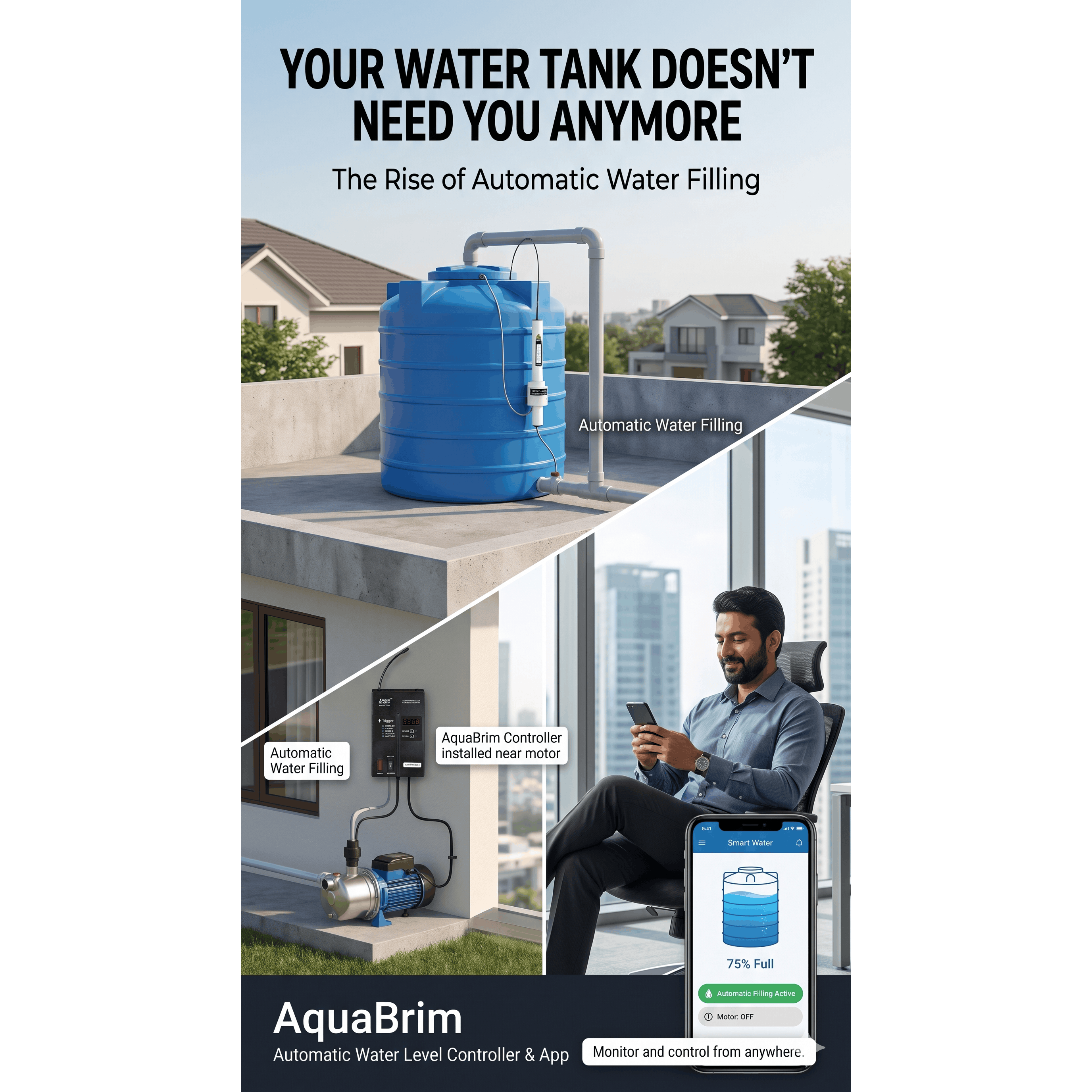
Your Water Tank Doesn't Need You Anymore: The Rise of Automatic Water Filling
There was a time when filling a water tank was simply another household chore.
Someone had to switch on the motor. Someone had to remember when the tank would be full. And, most importantly, someone had to remember to switch the motor off.
Forget for a few minutes, and water could start flowing over the tank.
Leave the motor running for longer than necessary, and you are wasting electricity and potentially putting unnecessary load on the pump.
But things are changing.
With automatic water filling systems, the water tank can increasingly manage its own filling cycle. The system monitors the water level and operates the pump according to predefined conditions, reducing the need for someone to constantly supervise the process.
In simple terms:
You don't have to keep checking the tank. The system does the checking for you.
What Is Automatic Water Filling?
Automatic water filling refers to a system that monitors the water level in a tank and automatically controls the water-filling process.
A typical automatic water filling system may include:
Water-level sensor or transmitter
Water-level controller
Pump or motor
Receiver/control unit
Water source monitoring
Level-based ON/OFF logic
Dry-run or pump protection, depending on the system
Optional wireless or remote monitoring
The basic idea is straightforward.
When the water level falls below the configured level, the system can start the pump.
When the tank reaches the required level, the system can stop the pump.
This eliminates the need for someone to stand around waiting for the tank to fill.
Why Are More Homes Moving Towards Automatic Water Filling?
The biggest reason is not technology for the sake of technology.
It is convenience.
Modern homes often have irregular water supply timings, multiple tanks, underground storage, overhead tanks and pumps located away from the living area.
Manually managing all of this becomes inconvenient.
Consider a common situation.
The water supply arrives in the morning. You switch on the motor and continue with your daily work.
Then you get busy.
An hour later, someone remembers the motor.
By then, the overhead tank may already have been full for quite some time.
Automatic water filling is designed to remove this dependency on memory.
How Does Automatic Water Filling Work?
Although the exact configuration differs from one system to another, the basic principle is easy to understand.
1. The System Monitors the Water Level
A sensor or transmitter detects the water level inside the tank.
It can identify when the tank reaches predefined conditions such as low, required or full level.
2. The Controller Makes the Decision
The controller receives the level information and compares it with the configured operating conditions.
If the tank requires water, it can initiate the filling process.
3. The Pump Starts Automatically
When the required condition is met, the controller can switch the connected pump ON.
The water then begins filling the tank.
4. The Tank Reaches the Required Level
As the water level rises, the sensor continues to provide information to the control system.
5. The Pump Stops
Once the configured full or stop level is reached, the controller can switch the pump OFF.
The process then stops without requiring someone to manually operate the switch.
This is the basic concept behind automatic water filling.
The Biggest Advantage: You Stop Thinking About the Tank
This may sound like a small benefit, but it is actually one of the biggest advantages.
Water tanks are usually located on terraces, rooftops, underground areas or service spaces.
You don't want to repeatedly climb stairs just to check whether the tank is full.
You also don't want to keep asking:
“Did someone switch off the motor?”
An automatic system takes over this repetitive responsibility.
That becomes especially useful for:
Busy households
Elderly people
Large houses
Apartments
Offices
Shops
Schools
Commercial buildings
Industrial facilities
1. Automatic Filling Helps Prevent Tank Overflow
Tank overflow is one of the most obvious problems with manual water filling.
A pump can continue running even after the tank is full if nobody switches it off.
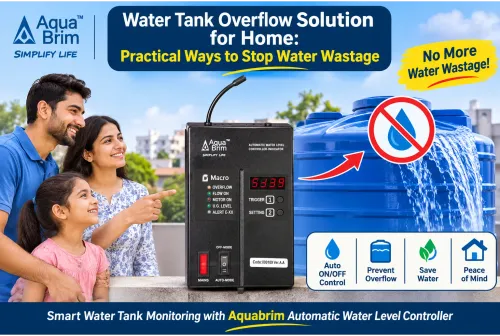
An automatic water filling system can use the detected tank level to stop the pump when the configured level is reached.
This can help reduce unnecessary water wastage.
It is important to understand that the exact overflow protection depends on the sensor arrangement, controller and installation.
2. It Can Reduce Unnecessary Pump Running
A pump should ideally run when water is actually required.
If the overhead tank is already full, continuing to operate the motor serves little purpose.
Automatic level-based control can stop the pump once the required level is reached.
Over time, reducing unnecessary pump operation can also help avoid avoidable electricity consumption and pump wear.
Actual savings will naturally depend on the pump, water usage, operating conditions and how often the motor previously ran unnecessarily.
3. It Helps When Water Supply Timings Are Unpredictable
In many locations, water does not arrive at exactly the same time every day.
A municipal water supply may become available at a particular time window, but the actual duration can vary.
An automatic water filling setup designed for such an application can monitor the availability of the incoming supply and operate according to the configured conditions.
This is particularly useful when the household cannot be present to supervise the filling process.
4. It Can Reduce the Risk of Dry Running
Overflow is only one side of the problem.
The other problem is running the pump when there is not enough water available at the source.
For example, a borewell or underground water source may not always have sufficient water for continuous pumping.
A suitable automatic pump-control system can incorporate source-water monitoring and dry-run protection, depending on the model and configuration.
This is why selecting a system according to the water source is important.
A municipal water application and a borewell application should not automatically be treated as the same problem.
5. Automatic Filling Is Useful for Multiple Tanks
Managing one tank manually is relatively simple.
Managing several tanks is not.
Consider a property with:
One underground tank
Three overhead tanks
Two pumps
Separate buildings
Different water-level requirements
Someone would need to regularly monitor all of them.
A multi-tank automation system can centralise this process.
Instead of treating every tank as a completely separate task, the system can monitor and manage the connected tanks according to its design and configuration.
This is particularly useful in:
Apartment complexes
Schools
Hospitals
Hotels
Factories
Large residential properties
Commercial buildings
6. Wireless Automatic Water Filling Makes Installation Easier
Traditional water-level automation may require signal cables between the tank and controller.
That can become inconvenient when the tank is located several floors above the motor room.
Wireless technology provides another option.
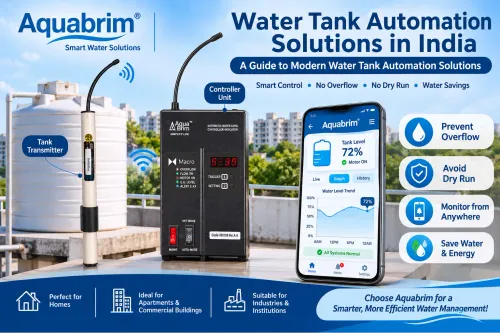
A wireless water-level transmitter installed near the tank can communicate with the control unit without requiring a long physical signal cable between the two locations.
However, wireless range should never be considered purely as a number printed on a product brochure.
Actual performance can vary depending on:
Building structure
Reinforced concrete
Number of floors
Walls
Distance
Equipment placement
Electrical interference
A proper site assessment is therefore important for larger installations.
7. Automatic Water Filling Can Be Combined With Remote Monitoring
Automation answers one question:
“Can the system manage the filling process automatically?”
Remote monitoring answers another:
“Can I know what is happening when I am not there?”
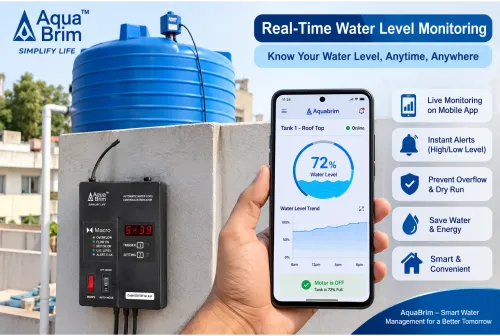
When these technologies are combined, users can potentially monitor tank conditions through a connected interface while the automatic controller handles the filling operation.
This can be particularly useful for:
Property owners
Facility managers
Apartment maintenance teams
Commercial properties
Multiple-site operations
Instead of physically visiting every location, the user can get visibility into the system remotely, depending on the monitoring configuration.
Automatic Water Filling Is Not Just for Homes
The idea may have started with household overhead tanks, but the same principle is useful in larger properties.
Residential Buildings
Automatic filling can help manage overhead tanks and pumps without requiring constant manual intervention.
Apartments
Housing societies often have multiple tanks and pumps. Automation can reduce the amount of routine manual operation required from maintenance staff.
Offices
Water availability is important for washrooms, housekeeping and general building operations. Automatic filling can simplify routine tank management.
Schools and Institutions
Automatic operation can reduce dependence on staff remembering to switch pumps on and off.
Hospitals
Water availability can be critical, making monitoring and reliable tank management particularly important.
Industrial Buildings
Industrial sites may have multiple storage tanks and different water requirements. Larger automation systems can be configured according to the site's requirements.
What Is the Difference Between an Automatic Water Level Controller and a Water Level Indicator?
These terms are sometimes used interchangeably, but they are not the same.
Water Level Indicator
A water-level indicator primarily tells you what is happening inside the tank.
For example:
Low water
Full tank
Overflow warning
Current level indication
It helps you monitor the tank.
Automatic Water Level Controller
An automatic controller can use the water-level information to operate the pump.
For example:
Water level low → Pump ON
Water level reaches required level → Pump OFF
So the simplest way to remember the difference is:
An indicator tells you. A controller can act for you.
This distinction is important when choosing a product.
What Should You Look For in an Automatic Water Filling System?
Before buying a system, don't start with the product name.
Start with your actual water arrangement.
1. What Is Your Water Source?
Is your water coming from:
Municipal supply?
Borewell?
Underground storage?
Another tank?
Multiple sources?
The answer can affect which type of automation system is appropriate.
2. How Many Tanks Do You Have?
A single overhead tank has a very different requirement from a property with several overhead and underground tanks.
3. How Many Pumps Are Involved?
Some installations have one motor, while larger properties may require control of multiple pumps.
4. Do You Need Automatic Pump Control?
If you only want to know the water level, an indicator may be sufficient.
If you want the pump to operate automatically, you need a suitable controller.
5. Do You Need Wireless Communication?
If the tank and pump are far apart or wiring is difficult, wireless monitoring may be worth considering.
6. Do You Need Mobile or Web Monitoring?
For a home, this may be optional.
For a commercial building or multiple-site operation, remote monitoring can be considerably more useful.
7. What Protection Features Are Required?
Depending on the application, consider whether you need features such as:
Dry-run protection
Overflow protection
Motor overload protection
Voltage protection
Supply detection
Multiple-level monitoring
The available features depend on the specific controller and configuration.
Automatic Water Filling With Aquabrim
Aquabrim develops water-level monitoring and automatic water-control solutions for homes, commercial buildings, institutions and larger installations.
The appropriate solution depends on the water source and the complexity of the installation.
For example, Aquabrim Trigger is designed for municipal water supply applications, while Macro is designed for borewell/submersible pump applications.
For larger installations involving multiple tanks and motors, Matrix provides a more extensive multi-tank control approach.
For users who primarily need water-level indication and alerts rather than automatic pump operation, Flexibell serves a different purpose.
This distinction is important because not every water-level product is intended to perform the same job.
Explore Aquabrim Water Automation Products
A Simple Example of Automatic Water Filling
Imagine a house with:
One underground tank
One overhead tank
One submersible pump
With manual operation, the process might look like this:
Check underground tank → Switch pump ON → Wait → Check overhead tank → Switch pump OFF
Now imagine the same setup with suitable automation.
Water level falls → System detects condition → Pump starts → Tank fills → Required level reached → Pump stops
The homeowner no longer needs to repeatedly check the tank.
That is the real value of automation.
It isn't about making something complicated.
It is about removing a repetitive task.
Common Mistakes When Installing Automatic Water Filling
Choosing a System Without Considering the Water Source
A controller designed for one application may not be the right choice for another.
Assuming Every Controller Provides Dry-Run Protection
Dry-run protection should be checked in the actual product specification rather than assumed.
Ignoring the Number of Tanks
If the property may expand or additional tanks are already present, the system should be selected accordingly.
Installing Wireless Equipment Without Considering Building Conditions
Wireless communication can be affected by walls, floors, concrete structures and equipment placement.
Confusing Monitoring With Automation
A device that tells you the tank is full is not automatically a device that can switch off your pump.
Treating Installation as an Afterthought
Correct sensor placement and controller installation are important for reliable operation.
Is Automatic Water Filling Worth It?
For a small house with a convenient water supply and an easily accessible tank, manual operation may still be perfectly workable.
But as the property becomes larger or the water system becomes more complicated, automation starts making much more sense.
It becomes particularly valuable when:
The tank is difficult to access
Water supply timings are irregular
The motor is located away from the house
Multiple tanks are involved
People frequently forget to switch the pump off
Water overflow is a recurring problem
A borewell pump requires better monitoring
Remote monitoring is required
The question isn't really whether a tank can be filled manually.
Of course it can.
The better question is:
Why should a person keep doing a repetitive job that a properly designed system can handle automatically?
Frequently Asked Questions
What is an automatic water filling system?
An automatic water filling system monitors water levels and can automatically operate a connected pump to fill the tank according to configured conditions.
Can automatic water filling prevent tank overflow?
A properly configured system can stop the pump when the tank reaches the required level, helping prevent overflow. The exact protection depends on the controller and installation.
Does automatic water filling save electricity?
It can reduce unnecessary pump operation by stopping the motor when the required water level is reached. Actual electricity savings depend on the pump and previous operating habits.
Can automatic water filling work with a borewell?
Yes, suitable systems can be designed for borewell and submersible pump applications. Source-water monitoring and dry-run protection may also be relevant depending on the system.
Can it work with municipal water supply?
Yes. Systems designed for municipal water applications can monitor incoming supply and manage tank filling according to the installation requirements.
Can automatic water filling work with multiple tanks?
Yes. Multi-tank automation systems are available for larger residential, commercial and institutional installations.
Is wireless automatic water filling reliable?
Wireless systems can be reliable when properly selected and installed. Actual communication performance depends on distance, building construction, obstacles and other site conditions.
Can I monitor my tank from my mobile phone?
Some connected water automation systems support remote monitoring through mobile or web interfaces. This depends on the specific system and connectivity configuration.
Is an automatic water level controller the same as a water level indicator?
No. An indicator primarily provides information about the water level, while a controller can use that information to operate the pump automatically.
Conclusion
The idea of an automatic water tank may have sounded unnecessary a few years ago.
Today, it makes practical sense for many homes and buildings.
Water tanks don't need to be checked every few hours. Pumps don't need to be switched on and off purely from memory. And a full tank doesn't have to be discovered only after water starts spilling onto the terrace.
With the right combination of water-level sensing, automatic pump control, source monitoring and optional remote connectivity, water filling can become a largely automatic process.
Your water tank may still need water.
It just doesn't need you standing next to it anymore