
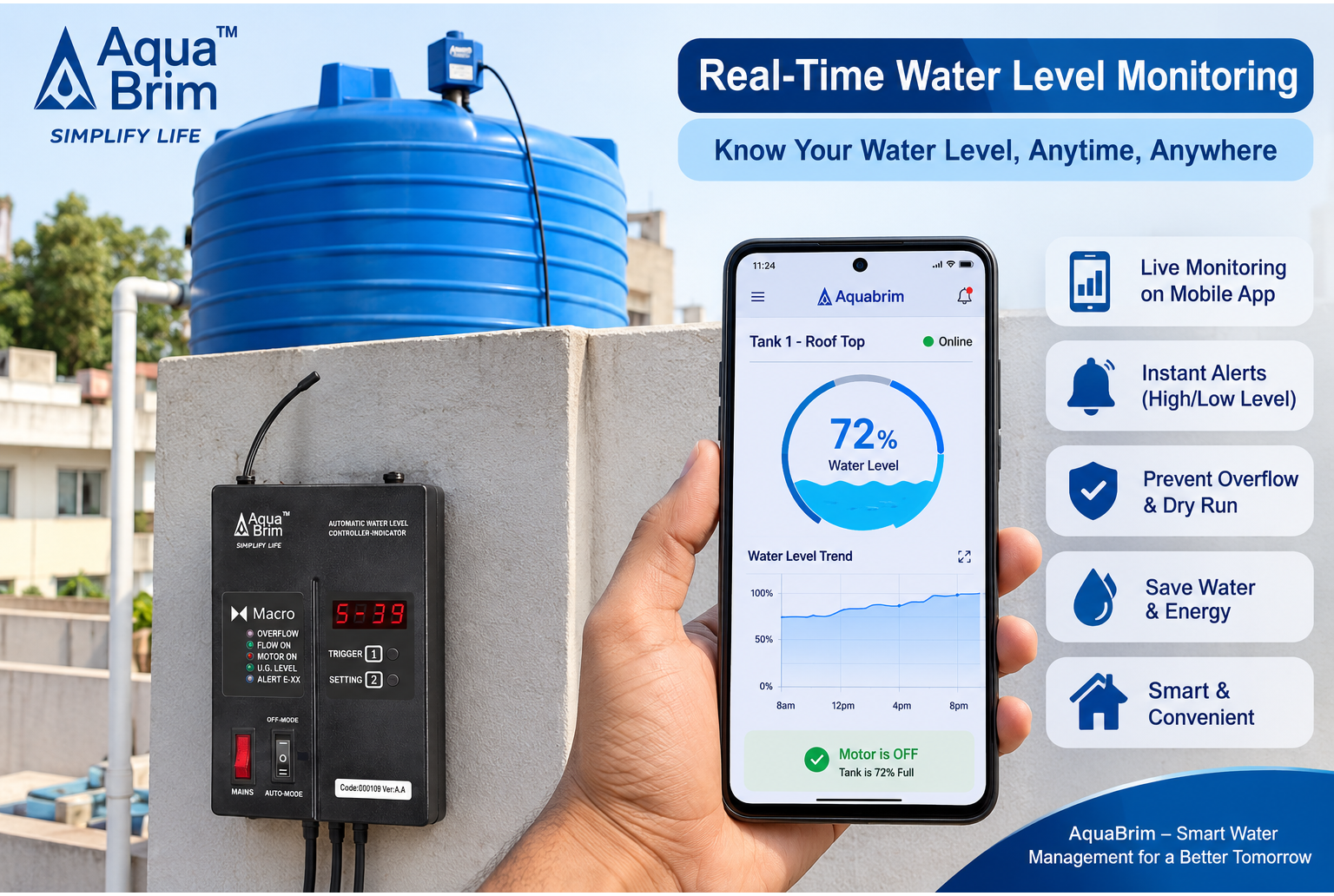
Managing water tanks manually may seem simple, but it becomes difficult when a building has multiple tanks, irregular water supply, underground storage, or a pump that needs to be monitored regularly.
A real-time water level monitoring device provides a much easier way to keep track of water levels. Instead of physically checking the tank or waiting until water runs out or overflows, the system continuously monitors the water level and provides information when it is needed.
For homes, apartments, offices, institutions, factories, hospitals and other commercial properties, real-time water level monitoring can make everyday water management more convenient and reliable.
What Is a Real-Time Water Level Monitoring Device?
A real-time water level monitoring device is an electronic system that continuously measures the water level inside a tank and communicates that information to a display, controller, or monitoring platform.
Depending on the type of system, the water level may be shown as:
Current tank level
Low-level indication
Full-level indication
Overflow warning
Multiple predefined water-level stages
Tank status on a connected mobile or web interface
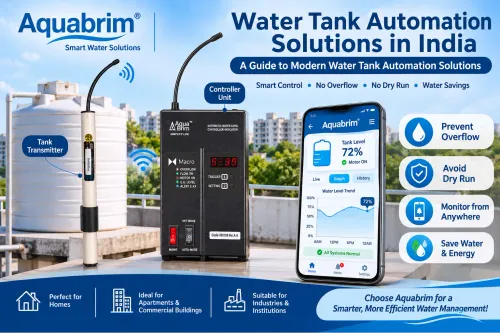
A typical setup consists of a water level sensor or transmitter installed at the tank and a receiver, display, controller, or connected monitoring system.
The important difference is that the user does not have to physically visit the tank every time they want to know its status.
Why Is Real-Time Water Level Monitoring Important?
Water management problems are often noticed only after something has already gone wrong.
For example, a residential overhead tank may overflow because the pump was left running. In another situation, a pump may continue operating even when the available water source is insufficient.
In a building with several tanks, manually checking every tank can become even more inconvenient.
Real-time monitoring changes this approach. Instead of checking water levels periodically, the system keeps monitoring them continuously.
This helps users make better decisions about:
When water needs to be filled
When the tank is nearly full
When water is getting low
Whether a particular tank needs attention
Whether a pump should be operated
Whether multiple tanks require monitoring
7 Major Advantages of Real-Time Water Level Monitoring
1. Know the Water Level Without Physically Checking the Tank
One of the biggest advantages is convenience.
With a suitable monitoring system, users can check the status of a tank without climbing to the terrace or opening a tank cover.
This can be particularly useful for:
Multi-storey houses
Apartment buildings
Offices
Schools
Hospitals
Factories
Commercial buildings
Instead of relying on guesswork, the user gets information based on the actual water level detected by the sensor.
2. Helps Prevent Water Tank Overflow
Overflow is one of the most common problems associated with manually operated water pumps.
A person may start the motor and forget to switch it off. Sometimes the water supply may arrive unexpectedly, or the tank may fill faster than expected.
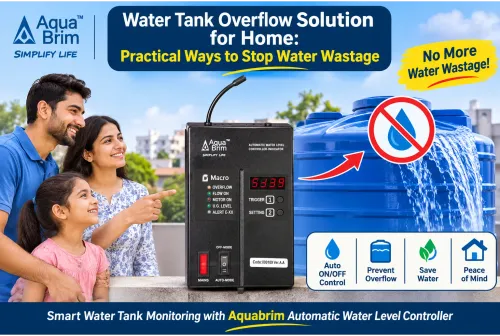
A real-time water level monitoring system can provide a full-level or overflow indication. When integrated with an automatic water level controller, the same information can also be used to control the pump, depending on the system configuration.
This can help reduce unnecessary water wastage caused by overflowing tanks.
3. Reduces Unnecessary Pump Operation
Running a pump when it is not required is inefficient.
For example, if an overhead tank is already sufficiently full, continuing to operate the pump serves no useful purpose.
Real-time level information allows the user or automation system to know the actual tank condition.
In an automatic setup, the controller can use predefined water-level conditions to operate the motor automatically.
This is particularly useful when the tank is located in an area that is difficult to access.
4. Makes Low-Water Conditions Easier to Identify
Monitoring is not only about preventing overflow.
Low water levels can also create problems, particularly when water is needed continuously for a home, office, commercial facility or industrial process.
A monitoring device can provide an early indication when the water level reaches a predefined low point.
This gives the user an opportunity to arrange the required water supply before the tank becomes completely empty.
5. Useful for Multiple Tanks
Monitoring one tank is relatively easy.
Monitoring several tanks is a different problem.
A property may have:
Underground water storage
One or more overhead tanks
Separate tanks for different buildings
Process water tanks
Multiple residential blocks
Walking around the property to check every tank is inconvenient.
A suitable multi-tank monitoring system can bring information from different tanks into a central monitoring or control setup.
This becomes particularly useful for apartments, institutions, commercial buildings and industrial facilities.
6. Helps Reduce Manual Monitoring
Manual tank checking takes time and is easy to overlook.
Someone has to remember to check the tank, determine the water level and decide whether the pump needs to be operated.
Automation reduces this dependency.
A real-time water level monitoring device can continuously provide the required information, while an automatic controller can take the next step and operate the pump according to configured conditions.
The result is a more systematic approach to water management.
7. Supports Remote Monitoring in Connected Systems
Some modern water monitoring systems can be connected to a mobile or web-based platform.
This can allow users to view tank information without being physically present at the property.
For property managers and facility teams, remote monitoring can be particularly useful when the water tanks are located across different buildings or sites.
Instead of waiting for someone to report a problem, the monitoring system can provide visibility into the current status.
How Does a Real-Time Water Level Monitoring System Work?
The basic process is relatively straightforward.
Step 1: Sensor Detects the Water Level
A sensor or transmitter is installed at the water tank.
It detects the water level using the technology supported by the particular system.
Step 2: Information Is Transmitted
In a wireless system, the transmitter sends the detected information to a receiver or controller.
This avoids the need to run long signal cables between the tank and the control equipment.
Step 3: System Processes the Information
The receiver or controller interprets the received level information.
Depending on the configuration, it may determine whether the tank is:
Low
Partially filled
Near full
Full
At an overflow condition
Step 4: User Gets the Information
The information can be displayed locally or, in connected systems, made available through a mobile or web interface.
Step 5: Automation Can Be Added
If the monitoring system is integrated with an automatic water level controller, the detected water level can also be used to control the pump.
This is where monitoring becomes part of a complete water automation system.
Where Can Real-Time Water Level Monitoring Be Used?
The technology is not limited to residential water tanks.
Homes
For an individual house, real-time monitoring can help with:
Overhead tank monitoring
Low-water alerts
Overflow prevention
Automatic pump operation
Apartments and Housing Societies
Larger residential properties may have several tanks and pumps.
A centralised monitoring system can make it easier for maintenance teams to understand the water status across different locations.
Offices and Commercial Buildings
Commercial properties often have fixed operating hours and maintenance teams.
Monitoring helps staff identify water-level problems without repeatedly inspecting tanks.
Schools and Institutions
Schools, colleges and institutions can use water-level monitoring to reduce the need for routine manual tank inspections.
Hospitals
Water availability can be critical in healthcare facilities.
Monitoring can provide maintenance teams with better visibility of storage tanks and help identify low-level conditions earlier.
Industrial Facilities
Industries may have several water storage tanks and different water requirements.
A multi-tank monitoring system can provide a centralised view of water levels and, where required, integrate with larger automation systems.
Real-Time Water Level Monitoring for Wireless Applications
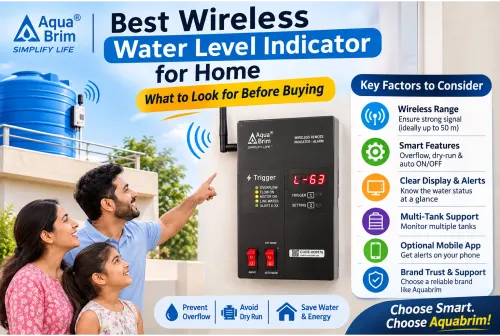
Wireless monitoring can be particularly useful when the tank and control room are separated by significant distances.
Instead of installing long cables between the tank and the controller, a wireless transmitter can communicate with the receiving unit.
However, wireless range should not be considered as a fixed number for every installation.
Actual performance can depend on:
Building construction
Reinforced concrete
Number of floors
Walls and obstructions
Equipment location
Electrical interference
Installation conditions
Therefore, the practical wireless performance of a system should be evaluated according to the actual site.
Real-Time Monitoring Is Different From Automatic Pump Control
This is an important point when selecting a device.
Suppose a person wants to know whether the overhead tank is full.
A water-level indicator may be sufficient.
But if the requirement is:
“When the water level becomes low, start the pump automatically, and stop it when the tank becomes full.”
Then the requirement is not simply monitoring. It requires an automatic water level controller capable of controlling the pump and supporting the required protection and operating conditions.
In other words:
Monitoring tells you what is happening.
Automation can take action based on what is happening.
For many properties, combining both provides a more complete solution.
What Should You Check Before Buying a Real-Time Water Level Monitoring Device?
Not every water-level monitoring device is suitable for every installation.
Before selecting one, consider the following.
1. Number of Tanks
If you have only one tank, a simple monitoring solution may be sufficient.
For multiple tanks, look for a system designed for multi-tank monitoring.
2. Tank Location
Consider the distance between the tank, receiver, controller and monitoring location.
For wireless systems, evaluate the actual building environment rather than relying only on the advertised range.
3. Monitoring or Automation Requirement
Decide whether you only need information about the water level or whether you also want automatic pump control.
4. Water Source
The requirement can be different for:
Municipal water supply
Borewell
Underground storage
Overhead storage
Multiple water sources
A system should be selected according to the actual water arrangement.
5. Low-Level and Full-Level Alerts
Check which water-level conditions the device can detect and how the information is communicated.
6. Remote Monitoring
If the property needs monitoring from outside the premises, consider a connected system with suitable mobile or web access.
7. Installation and Service
A technically suitable device is only part of the solution.
Installation support and after-sales service become particularly important for commercial and multi-tank installations.
Real-Time Water Level Monitoring with Aquabrim
Aquabrim provides water-level monitoring and automation solutions for residential, commercial and institutional applications.
For basic water-level indication and alerts, Aquabrim Flexibell is designed for monitoring water levels across multiple tanks and providing level-related alerts. It is important to note that an indicator system and a pump controller serve different purposes.
For automatic motor operation, Aquabrim offers different solutions based on the water source and installation requirement.
For example:
Trigger is suited to municipal water supply applications.
Macro is designed for borewell/submersible pump applications.
Matrix is intended for larger multi-tank and multi-motor applications.
Flexibell is focused on water-level indication and alerts rather than starting and stopping the motor.
For larger installations, the appropriate system should be selected after understanding the number of tanks, pumps, water sources and control requirements.
Explore Aquabrim Water Level Solutions
Common Mistakes When Choosing a Water Level Monitoring Device
Choosing an Indicator When Automatic Control Is Required
If you need the pump to start and stop automatically, simply buying a water-level indicator may not solve the problem.
Focusing Only on Wireless Range
A claimed wireless range does not guarantee identical performance inside every building.
The actual site conditions matter.
Ignoring the Water Source
A municipal water supply system and a borewell pumping system may require different control logic.
Buying a Single-Tank Solution for a Multi-Tank Requirement
If the property has several tanks, selecting a system designed only for one tank can create limitations later.
Forgetting About After-Sales Support
Water automation equipment is installed as part of an electrical and plumbing system. Proper installation and service support can therefore be important, particularly for larger sites.
Frequently Asked Questions
What is a real-time water level monitoring device?
It is a device or system that continuously detects the water level in a tank and communicates the information to a display, receiver, controller or connected monitoring platform.
Can a water level monitoring device prevent overflow?
It can provide a full-level or overflow indication. If it is integrated with a compatible automatic water level controller, the system may also automatically stop the pump when the configured level is reached.
Can water tank levels be monitored remotely?
Yes, some connected water-level monitoring systems can transmit tank information to a mobile or web-based platform.
Is wireless water level monitoring better than wired monitoring?
Neither is universally better. Wireless systems can simplify installation where long cables are inconvenient, while wired systems may be preferable in some installations. The choice depends on the site and application.
Can one system monitor multiple water tanks?
Yes, certain systems are specifically designed for multi-tank monitoring. The number of tanks supported depends on the particular system.
Does a water-level indicator automatically control the motor?
Not necessarily. An indicator primarily provides information or alerts. Automatic motor operation requires a suitable water-level controller and compatible pump-control setup.
Is real-time water monitoring useful for homes?
Yes. It can help homeowners know the tank condition, reduce manual checking and identify low or full water levels more conveniently.
Conclusion
A real-time water level monitoring device is more than just a digital replacement for checking a tank manually. It provides continuous visibility into water storage and can become an important part of a broader water automation system.
For a simple home installation, level indication and alerts may be enough. For a larger property, combining real-time monitoring with automatic pump control, multiple-tank management and remote connectivity can provide a much more complete solution.
The right system ultimately depends on the property, number of tanks, water source, pump arrangement and level of automation required.
The goal is simple: know what is happening inside your water tank before it becomes a problem.