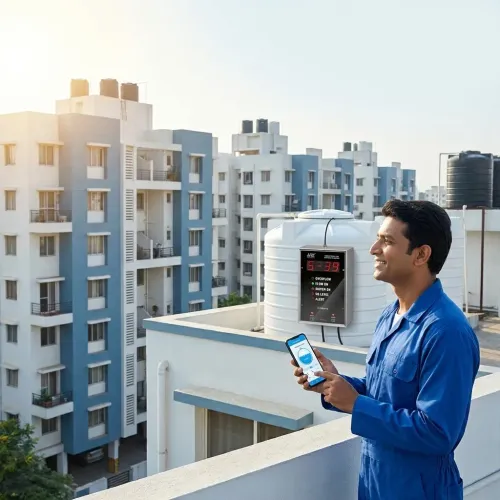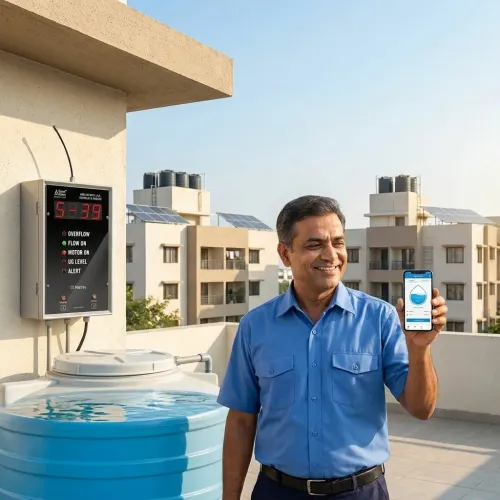

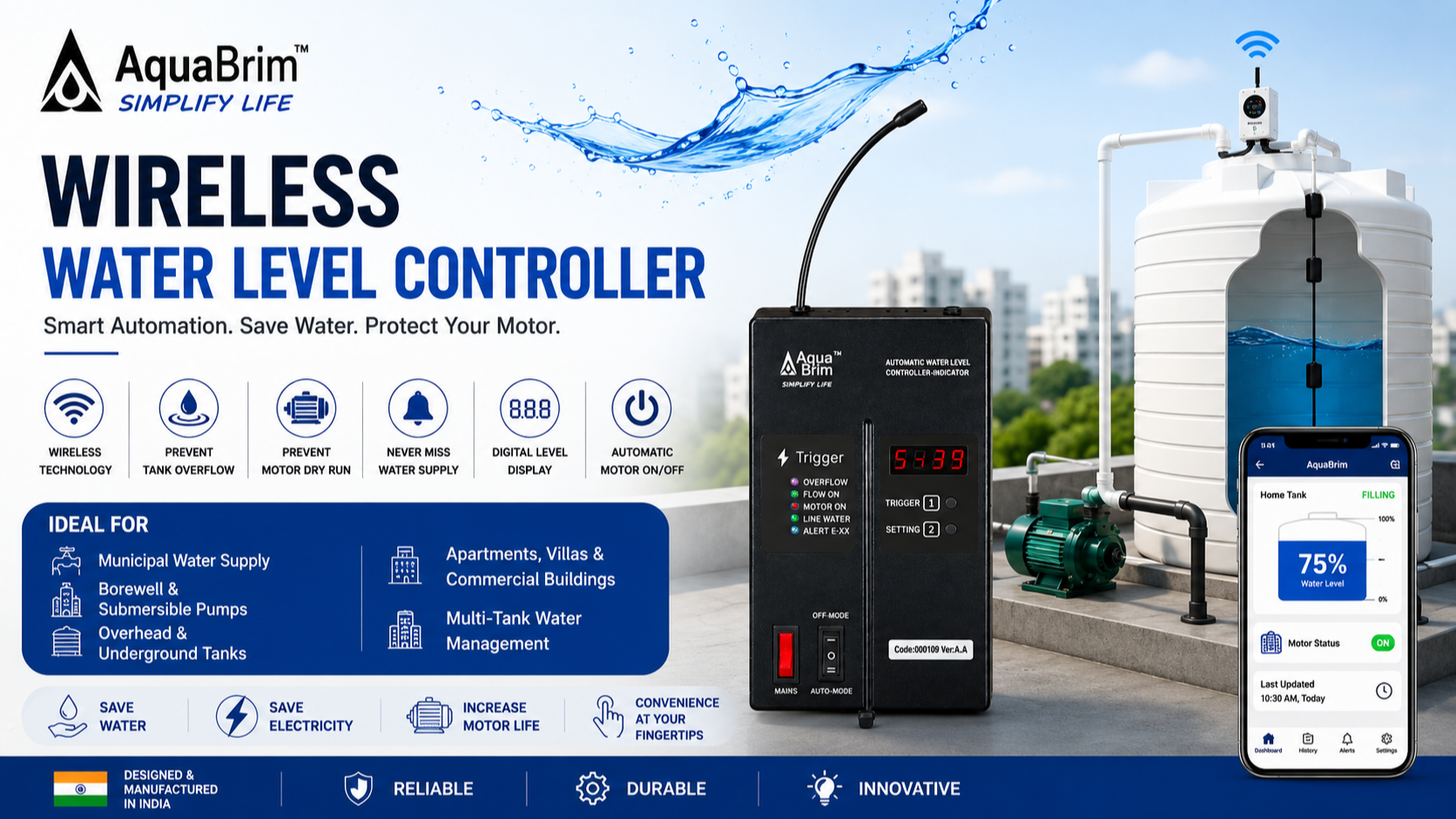
Managing a water tank should not require constant checking, climbing to the terrace, or remembering exactly when to switch the motor on and off. Yet, for many homes, apartments, and commercial buildings, this is still part of the daily routine.
A Wireless Water Level Controller changes that.
By using wireless sensors to communicate water level information to a controller, the system can monitor tanks and automate motor operation without requiring conventional wiring between the tank and the controller. Depending on the setup, it can help prevent water overflow, reduce the risk of dry running, and maintain a more consistent water supply.
For homes and buildings dealing with municipal water supply, borewell pumps, underground tanks, overhead tanks, or multiple tanks, wireless water automation can make everyday water management much simpler.
What Is a Wireless Water Level Controller?
A Wireless Water Level Controller is a system that monitors the water level in one or more tanks using wireless sensors and sends that information to a central controller.
The controller uses the water level data to determine when a motor should start or stop.
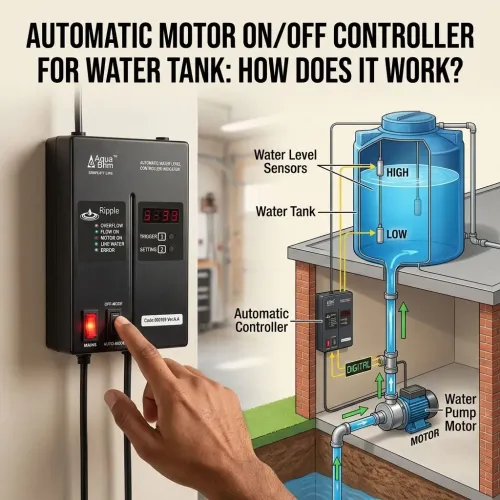
For example, when the water level in an overhead tank becomes low, the system can automatically start the motor. Once the required water level is reached, it can stop the motor automatically.
The key difference between a conventional wired system and a wireless system is communication. Instead of running cables between the water tank and the controller, wireless sensors transmit the required information using radio frequency technology.
This can make installation cleaner and more convenient, particularly when tanks are located on rooftops, in basements, or at a distance from the motor control unit.
How Does a Wireless Water Level Controller Work?
Although the exact operation depends on the type of water source and controller, the basic process is straightforward.
1. The System Monitors the Water Level
Wireless sensors are installed in the overhead tank, underground tank, borewell, or other relevant water source.
These sensors monitor the water level and communicate the information to the controller.
2. The Controller Receives the Information
The controller receives the wireless signal and processes the water level information.
It can display the tank status and use the information to decide whether the motor needs to operate.
3. The Motor Starts When Required
If the overhead tank level drops below the configured level, the controller can automatically switch on the motor.
For municipal water systems, a suitable controller can also detect when water becomes available in the supply line and begin the filling process.
4. The Motor Stops Automatically
Once the tank reaches the required level, the controller switches off the motor.
Depending on the system, the motor may also stop if water supply is interrupted or if dry-run conditions are detected.
The result is a more automated water management process with less dependence on manual operation.
Why Choose a Wireless Water Level Controller?
No Wiring Between the Tank and Controller
One of the major benefits of wireless technology is the reduction in wiring between the tank and the controller.
Running wires from a rooftop tank to a motor panel can sometimes involve additional installation work. Wireless sensors communicate directly with the controller, helping create a cleaner installation.
Automatic Motor Control
A Wireless Water Level Controller can automatically operate the motor based on the water level.
This means you do not have to remember to switch the motor on when the tank is empty or switch it off when the tank is full.
Helps Prevent Water Tank Overflow
Water overflow is one of the most common problems associated with manual motor operation.
When the water level reaches the configured full level, the controller can stop the motor automatically. This helps avoid unnecessary water wastage and the inconvenience of overflowing tanks.
Dry-Run Protection
Running a water motor without sufficient water can potentially cause damage.
Depending on the controller and water source, dry-run protection can stop the motor when the source water level becomes too low or when water flow is interrupted.
Suitable for Different Water Systems
Wireless water level automation can be used across different applications, including:
Municipal water supply
Overhead tanks
Underground tanks
Borewell systems
Submersible pumps
Apartments and housing societies
Commercial buildings
Multi-tank installations
The right controller depends on how your water system is configured.
Wireless Water Level Controllers for Municipal Water Supply
Municipal water supply can be unpredictable.
In some locations, water may arrive early in the morning, late at night, or at a different time every day. Missing the supply can leave the overhead tank empty until the next water cycle.
Aquabrim's Trigger is designed for homes, apartments, and commercial buildings that depend on municipal or corporation water supply.
The system can detect water availability in the supply line and automatically start the motor when water arrives. Wireless tank sensors monitor the water level, while the controller manages the motor operation.
Once the tank is full, the motor stops automatically.
This type of automation can be particularly useful for households that do not want to wake up at odd hours simply to monitor the water supply.
Wireless Water Level Controllers for Borewell and Submersible Pumps
Borewell and submersible pump systems have different requirements.
In a typical setup, water may be pumped from an underground tank or borewell into an overhead tank. The system needs to know when the overhead tank requires water and whether sufficient water is available at the source.
Aquabrim's Macro is designed for borewell and submersible pump automation.
Wireless sensors can monitor both the overhead tank and the underground water source. When the overhead tank reaches a low level, the system can automatically start the motor.
The controller then continues monitoring the system and can stop the motor when the overhead tank is full or when conditions indicate that the source water is too low.
This automation helps reduce the need for manually operating the pump every day.
Wireless Water Level Control for Multiple Tanks
Large buildings often have more than one water tank.
Residential societies, commercial buildings, hospitals, institutions, and industrial facilities may need to monitor several overhead tanks along with underground storage.
In these situations, a single-tank controller may not be enough.
Aquabrim's MATRIX is designed for larger multi-tank water automation requirements. It can centrally monitor multiple tanks using wireless RF communication and support automated motor control.
For facilities that need greater visibility and centralized management, multi-tank wireless automation can simplify water monitoring across the property.
Wireless Water Level Monitoring Without Motor Automation
Not every building needs the controller to operate a motor automatically.
Some facilities may simply want to know the water level and receive an alert when the tank becomes low, full, or reaches an overflow condition.
For this requirement, a wireless water level monitoring and alarm system can be useful.
Aquabrim's FLEXIBELL is designed as a wireless water level indicator and alarm system. It receives information from wireless sensors and provides water level visibility and alerts for connected tanks.
This can be useful where monitoring is required but automatic motor operation is not.
Important Features to Look for in a Wireless Water Level Controller
Before choosing a system, consider the following features:
Wireless Communication
Look for a system that can communicate reliably between the tank sensors and the controller.
Automatic Motor ON/OFF
The controller should automatically start and stop the motor according to the configured water levels and system conditions.
Overflow Prevention
The system should be able to stop the motor when the tank reaches the required full level.
Dry-Run Protection
For suitable applications, dry-run protection can help prevent the motor from operating when there is insufficient water.
Multi-Tank Support
If one motor fills multiple tanks, choose a controller that supports additional wireless sensors.
Water Level Display
A digital display can provide a quick view of the current water level and system status.
Manual Control
Even in an automated system, manual motor operation can be useful when required.
Timers and Scheduling
Some controllers provide timer functions for water systems that operate according to fixed schedules.
Remote Monitoring
Advanced systems can support web or app-based monitoring, allowing users to view water system information remotely.
Who Needs a Wireless Water Level Controller?
A Wireless Water Level Controller can be useful for many types of users.
Independent Homes
Homeowners can automate the process of filling overhead tanks and reduce the need for manual motor operation.
Apartments
Apartment residents and building managers can use automation to manage shared water systems and avoid overflow or empty tanks.
Homes With Municipal Water Supply
A controller that detects incoming municipal water can be particularly useful when supply timings are irregular.
Borewell and Submersible Pump Users
Wireless automation can monitor both the source and destination tanks while helping manage pump operation.
Commercial Buildings
Offices, schools, hospitals, and other facilities can benefit from centralized water monitoring.
Housing Societies
Multi-tank wireless controllers can provide a more organized approach to monitoring water levels across larger properties.
Wireless Water Level Controller vs Conventional Wired Controller
The main difference is the way information travels between the tank and the controller.
A conventional system may require physical wiring between sensors and the control unit.
A Wireless Water Level Controller uses wireless communication between the sensors and controller.
This can reduce installation complexity, especially when the tanks and motor are located far apart.
However, the right solution should always be selected based on the property's water source, number of tanks, pump type, and automation requirements.
The Future of Water Management Is Automated
Water management is becoming smarter.
Instead of relying entirely on manual switches and visual tank inspections, wireless systems can continuously monitor water levels and respond automatically.
For a homeowner, this can mean fewer daily tasks.
For a building manager, it can mean better visibility over multiple tanks.
For a commercial or institutional facility, it can support a more organized and scalable water management system.
A Wireless Water Level Controller combines water level monitoring with automation to help make the entire process simpler, more reliable, and easier to manage.
Frequently Asked Questions About Wireless Water Level Controllers
1. What is a Wireless Water Level Controller?
A Wireless Water Level Controller is a system that uses wireless sensors to monitor water levels and communicate with a controller. Depending on the setup, the controller can automatically start or stop a water motor.
2. Does a wireless water level controller require wiring between the tank and the controller?
In wireless systems, communication between the tank sensors and controller is carried out wirelessly. This can eliminate the need for conventional wiring between the tank and the controller unit.
3. How does a Wireless Water Level Controller prevent tank overflow?
The system continuously monitors the water level while the tank is being filled. Once the configured full level is reached, the controller can automatically stop the motor.
4. Can a Wireless Water Level Controller protect a motor from dry running?
Yes, depending on the controller and water system. Controllers designed with dry-run protection can stop the motor when the source water level becomes too low or when water flow is interrupted.
5. Can it be used with municipal water supply?
Yes. A controller designed for municipal water can detect when water becomes available in the supply line and automatically start the motor to fill the overhead tank.
6. Can it work with a borewell or submersible pump?
Yes. Wireless water level controllers can be designed specifically for borewell and submersible pump systems, monitoring the source water and overhead tank to automate motor operation.
7. Can one wireless controller manage multiple water tanks?
Yes. Multi-tank systems can use additional wireless sensors to monitor several tanks from a centralized controller, depending on the model and configuration.
8. What is the advantage of wireless technology in water level control?
Wireless technology reduces the need to run cables between the water tanks and the controller. This can simplify installation and make the system more suitable for properties where tanks and motor panels are located far apart.
9. Can I manually operate the motor if I have an automatic controller?
Many automatic water level controllers include manual operation options, allowing the motor to be operated manually when required.
10. How do I choose the right Wireless Water Level Controller?
The right controller depends on your water source and system setup. Municipal water users may require a municipal supply controller, while borewell users may need a pump automation controller. Large buildings with several tanks may require a multi-tank wireless system.
Final Thoughts
A Wireless Water Level Controller can remove much of the effort involved in everyday water management.
By monitoring water levels wirelessly and automating motor operation, these systems can help prevent overflow, reduce the risk of dry running, and eliminate the need for constant manual tank checking.
Whether your water comes from a municipal supply, a borewell, an underground tank, or a multi-tank building system, the right wireless controller can make water management more efficient and convenient.
Aquabrim offers different wireless water automation solutions for municipal supply, borewell and submersible pumps, multi-tank installations, and wireless water level monitoring. The best solution depends on your specific water system and automation requirements.