
A water motor or pump plays a critical role in moving water from a municipal supply, borewell, underground tank, or sump to an overhead tank. But what happens when the motor is running and there isn't enough water available?
This situation is known as dry running or a dry run.
Running a motor without adequate water can cause overheating and damage to the pump. For homes and buildings that depend on borewell or submersible pumps, dry-run protection can therefore be an important part of an automated water management system.
Aquabrim's smart water automation solutions are designed to monitor water availability and tank levels and automatically stop the motor when conditions indicate a dry-run risk. Its Macro controller, for example, monitors both the underground/source water and overhead tank and is specifically designed for borewell and submersible pump automation.
What Is Dry Run Protection for Water Motor?
Dry Run Protection for Water Motor is a safety feature that prevents a water pump from continuing to operate when there is insufficient water available.
In a conventional setup, a motor may continue running even after the underground tank, sump, borewell, or water supply has run dry. Because the pump is designed to operate with water, continued operation under these conditions can lead to overheating and potential motor damage.
A smart controller can monitor the water source and/or water flow. If it detects that water is no longer available, it can automatically switch the motor off.
Aquabrim identifies dry-run motor protection as one of its key water automation features.
What Happens When a Water Motor Runs Dry?
A water pump is designed to operate while pumping water. When the water supply is interrupted, the pump can continue running without adequate water.
This can result in:
- Excessive heat generation
- Pump component wear
- Bearing damage
- Reduced motor life
- Increased maintenance requirements
- Motor burnout in severe cases
Aquabrim's Trigger product information specifically explains that its dry-run protection stops the motor when water supply is interrupted while the motor is running, helping prevent damage associated with running without water.
This is particularly important where water supply is unpredictable.
Why Is Dry Run Protection Important?
1. Helps Protect the Water Motor
The primary purpose of dry-run protection is to prevent the motor from operating when water isn't available.
Instead of allowing the motor to continue running indefinitely, an automated controller can detect the problem and stop it.
2. Reduces the Risk of Motor Burnout
Motor replacement or repair can be expensive and inconvenient.
Preventing the motor from running without sufficient water can help reduce the possibility of avoidable damage.
Aquabrim describes dedicated dry-run protection as a key feature of its Macro controller for borewell and submersible pump systems.
3. Provides Automatic Protection
With manual motor operation, someone needs to notice that the water supply has stopped.
A smart controller can monitor the system continuously.
If the required water conditions aren't present, the controller can stop the motor automatically.
This is particularly useful when nobody is available to monitor the pump.
4. Useful for Borewell and Submersible Pumps
Dry-run protection is particularly relevant to borewell and submersible pump installations.
Aquabrim's Macro monitors water levels in the underground source and overhead tank. According to Aquabrim, Macro stops the motor if the underground tank level drops below 20% while filling, or if water flow is interrupted for more than two minutes.
The controller can restart once the underground water level recovers to at least 30%.
How Does Dry Run Protection Work?
Different controllers use different detection methods.
A smart water automation system may monitor:
- Water level in the source tank
- Water level in the overhead tank
- Water flow
- Incoming municipal supply
- Motor operating time
- System conditions
The controller then uses this information to determine whether the motor should continue running.
Example
Imagine a house with:
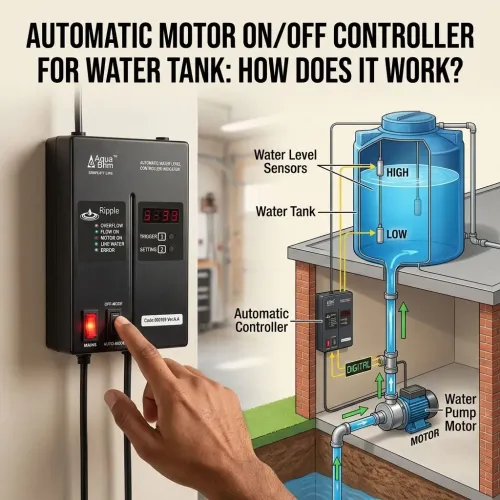
Underground tank → Submersible pump → Overhead tank
The overhead tank becomes low, so the controller starts the pump.
While the pump is running, the controller monitors the underground water level.
If the underground tank becomes too low, the controller detects the condition and stops the pump.
This prevents the motor from continuing to operate without sufficient water.
Aquabrim Macro: Dry Run Protection for Borewell & Submersible Pumps
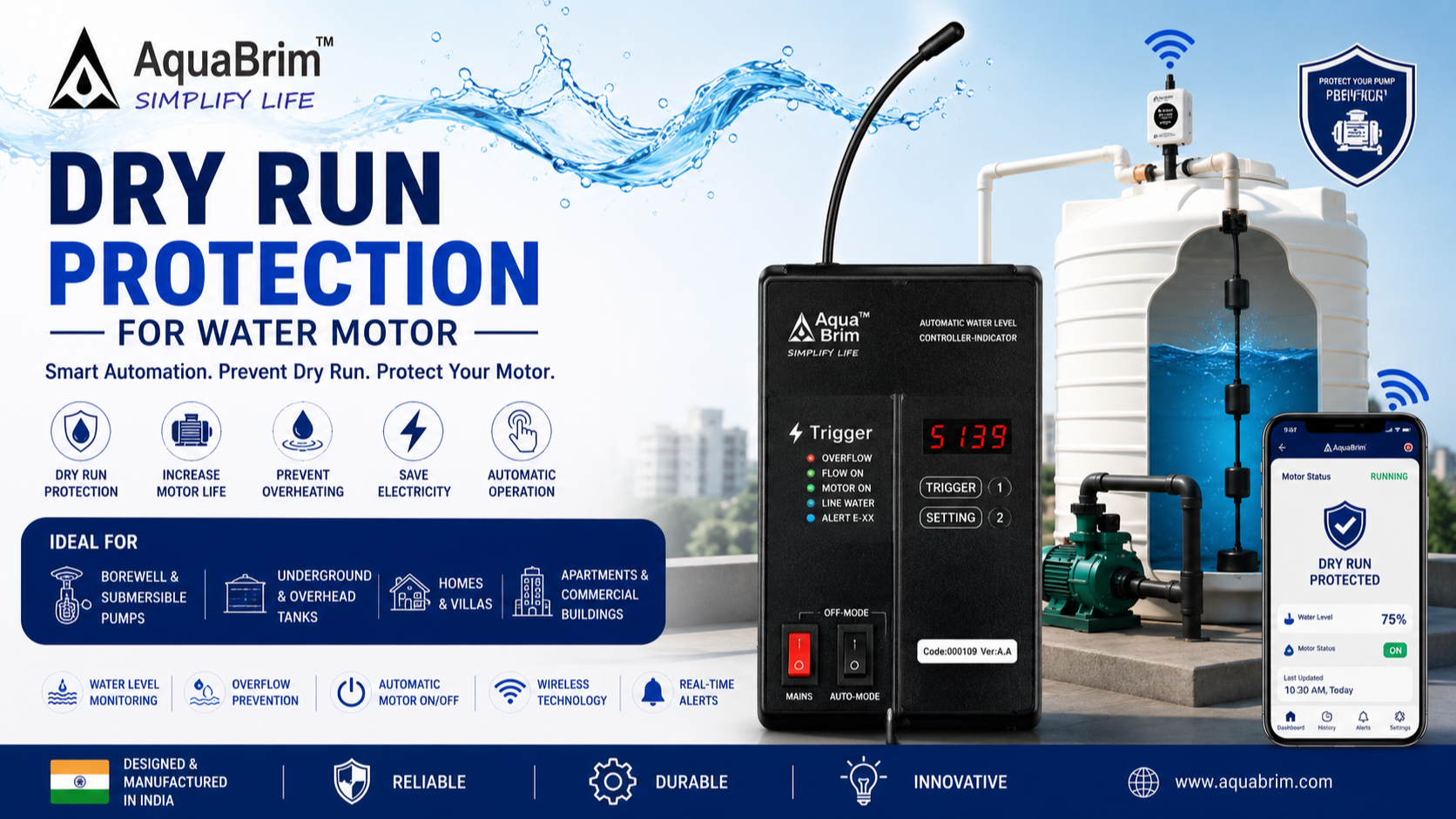
Aquabrim's Macro is specifically designed for borewell and submersible pump applications.
It uses RF-based wireless sensors to monitor both the underground/source water and overhead tank. According to Aquabrim, when the overhead tank falls below 50%, Macro automatically starts the motor.
During filling, the system continues monitoring the source water.
If the underground water level drops below 20%, Macro stops the motor to protect it from dry running. It can also stop the motor if water flow is interrupted for more than two minutes.
When the source water recovers to at least 30%, the system can automatically restart the motor.
This makes source-water monitoring an important part of the protection system.
Dry Run Protection for Municipal Water Supply
Dry-run protection isn't limited to borewell systems.
Homes connected to municipal water supplies can also experience interruptions while a motor is running.
Aquabrim's Trigger is designed for municipal/corporation water supply systems. It detects incoming water, automatically starts the motor when supply is available, and monitors the system while filling the overhead tank.
If the water supply is interrupted while the motor is running, Trigger's dry-run protection can stop the motor automatically.
This is especially useful in areas where municipal water pressure and availability can change during the day.
Dry Run Protection and Automatic Motor Control
Dry-run protection becomes even more useful when combined with automatic motor control.
A smart controller can perform several tasks:
Water level low → Motor ON
Water available → Continue pumping
Tank full → Motor OFF
Water source too low → Motor OFF
Water flow interrupted → Motor OFF
This means the system doesn't simply switch the motor on and off based on the overhead tank. It can also consider whether water is actually available for pumping.
Aquabrim describes its overall system as continuously monitoring both incoming water supply and tank levels before controlling motor operation.
Wireless Dry Run Protection
One advantage of modern water automation is wireless sensing.
Traditional installations may require cables to connect sensors in a rooftop or underground tank to the controller.
Aquabrim's Macro uses RF wireless sensor technology, so the tank sensors communicate with the controller without wiring between the tanks and controller unit.
This can simplify installation, especially in multi-storey buildings or properties where running new cables would be inconvenient.
Dry Run Protection vs Manual Motor Operation
| Manual Motor Operation | Smart Motor Protection |
|---|---|
| Motor switched on manually | Motor can start automatically |
| User must monitor water supply | System monitors water conditions |
| Motor may continue running after supply stops | Motor can stop when dry-run conditions are detected |
| Tank must be checked manually | Tank level is monitored automatically |
| Higher dependence on human attention | Less manual intervention |
| Overflow and dry-run risks remain | Overflow and dry-run protection can be integrated |
A smart controller does not simply automate convenience—it can add another layer of protection to the water pumping system.
Other Features to Look for in a Water Motor Controller
When selecting a controller, dry-run protection should not be considered in isolation.
Useful features can include:
Automatic Motor ON/OFF
The controller should be able to start and stop the motor based on water requirements.
Water Level Monitoring
The system should provide information about the water level in connected tanks.
Overflow Prevention
The motor should stop when the destination tank reaches its configured level.
Wireless Sensors
Wireless communication can simplify installation.
Flow Monitoring
A flow sensor can provide additional information about whether water is actually moving through the system.
Voltage Protection
Electrical protection can help protect the motor and controller from unsuitable voltage conditions.
Multi-Tank Support
Properties with several tanks may need additional sensors and centralized control.
Remote Monitoring
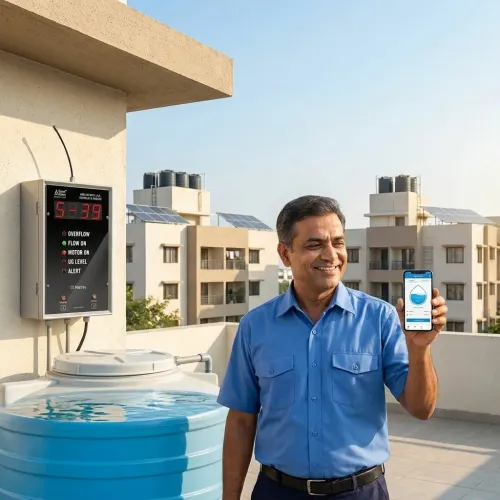
Advanced systems can provide water level, motor status, and alerts through web or mobile platforms. Aquabrim states that its smart platform provides real-time visibility into water levels, motor performance, tank conditions, and system notifications.
Who Should Consider Dry Run Protection for a Water Motor?
Dry-run protection can be particularly useful for:
- Homes using borewell water
- Submersible pump installations
- Homes with underground storage tanks
- Apartments
- Housing societies
- Commercial buildings
- Buildings with irregular municipal supply
- Properties with multiple water tanks
- Facilities where the motor cannot be monitored continuously
If a property depends on a motor to move water from one tank or source to another, protecting that motor from inadequate water conditions can be an important consideration.
Frequently Asked Questions
1. What is Dry Run Protection for a Water Motor?
Dry-run protection is a safety feature that detects when a motor is operating without sufficient water and automatically stops it. This helps reduce the risk of overheating and motor damage.
2. Why does a water motor need dry-run protection?
A motor may continue operating even when the water source has become empty or water supply has been interrupted. Dry-run protection automatically stops the motor when the system detects conditions that could cause dry running.
3. Can dry running damage a water pump?
Yes. Operating a pump without adequate water can cause excessive heat and may damage pump components. Aquabrim specifically positions dry-run protection as a way to prevent motor damage from running without water.
4. Does Aquabrim provide Dry Run Protection for Water Motors?
Yes. Dry-run protection is included among Aquabrim's water automation features. Macro is specifically designed for borewell and submersible pump applications, while Trigger provides dry-run protection for municipal water supply applications.
5. How does Aquabrim Macro protect a motor from dry running?
Macro monitors the underground/source water level and overhead tank. Aquabrim states that Macro stops the motor when the underground level drops below 20% while filling or when water flow is interrupted for more than two minutes.
6. When does Macro restart after a dry-run stop?
According to Aquabrim, Macro can automatically restart once the underground water level recovers to at least 30%.
7. Can dry-run protection work with a borewell pump?
Yes. Borewell and submersible pump systems are among the applications where dry-run protection is particularly valuable. Aquabrim's Macro is specifically designed for these systems.
8. Can dry-run protection work with municipal water supply?
Yes. Aquabrim's Trigger is designed for municipal/corporation water supply and can stop the motor if water supply is interrupted while it is running.
9. Does a dry-run controller also prevent tank overflow?
Many smart water controllers combine both functions. Aquabrim's systems are designed to monitor tank levels, stop the motor when the tank is full, and provide dry-run protection.
10. Does dry-run protection require a wired sensor?
Not necessarily. Aquabrim's Macro uses RF wireless sensor technology, allowing tank sensors to communicate with the controller without tank-to-controller wiring.
11. Can a water motor controller monitor both the underground and overhead tanks?
Yes. Aquabrim's Macro is designed to monitor both the underground/source tank and overhead tank, allowing the system to manage pumping while protecting against low source-water conditions.
12. Can I monitor my motor remotely?
Aquabrim states that its smart web and mobile platform can provide real-time information about water levels, motor performance, tank conditions, and system notifications, depending on the connected system.